Oct 8, 2026
Recap of the Senate District 14 Debate Between Republican Bernie Perryman and DFL Aric Putnam
By Kayla Williams / Asst. News Director
ST. CLOUD, Minn. — Republican Rep. Bernie Perryman and DFL Sen. Aric Putnam discussed government fraud, immigration enforcement, school meals, and state spending during a Senate District 14 debate Wednesday night.
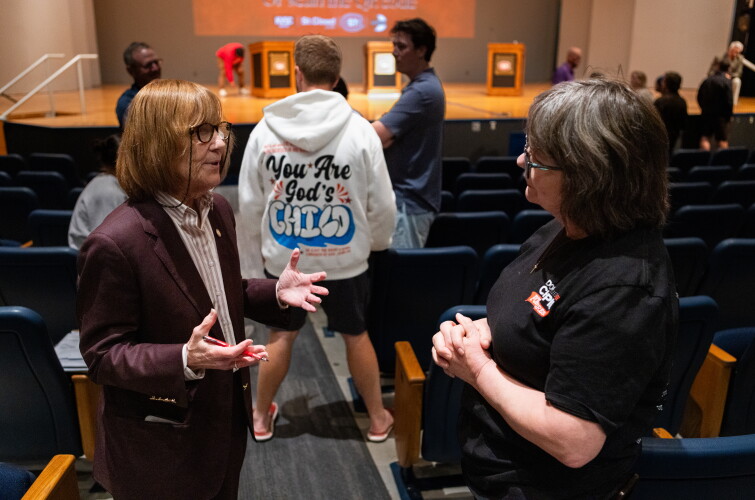
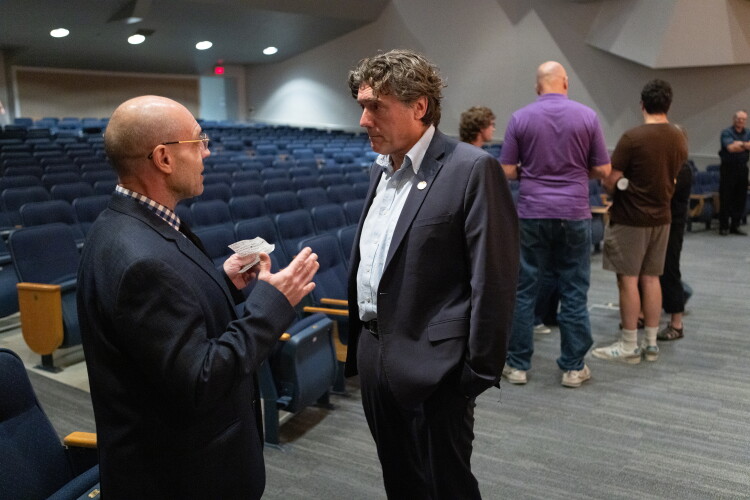
The debate, hosted by KVSC and St. Cloud LIVE, took place Oct. 7 at Ritsche Auditorium on the St. Cloud State University campus.
Candidates answered questions from moderators and the public before questioning each other near the end.
While they agreed on some issues, the candidates disagreed on how to address them, leading to several arguments over their legislative decisions.
Fraud and Government Accountability
Fraud was one of the first major disagreements between the candidates, especially over who should be held accountable for preventing it.
Putnam discussed his work on legislation to establish an Office of Inspector General to investigate fraud within state agencies. He criticized Republican leadership in the Minnesota House for failing to advance the proposal after the Senate passed it.
Perryman disagreed, emphasizing that legislative success depends on cooperation from both parties. She also disagreed with Putnam taking credit for the bill, saying several lawmakers’ efforts made it pass.
She emphasized the importance of regular audits, protecting employees who report fraud, and improving communication between state agencies.
Both candidates supported updating the state’s technology to help track spending and prevent future fraud.
Public Safety and Immigration Enforcement
Public safety brought another disagreement, particularly over gun violence and immigration enforcement.
Perryman said more attention should go to mental health care, school safety, and providing resources for law enforcement.
Putnam responded that mental health is only one part of the issue and should not be the main explanation for gun violence.
The conversation also turned to Operation Metro Surge, with both candidates sharing their views on federal immigration enforcement in St. Cloud.
Perryman acknowledged mistakes during the operation but said federal agents were working to remove people considered threats to public safety. She argued that better communication between federal and local law enforcement could have prevented some confrontations.
Putnam strongly criticized how the operation was handled.
“Metro Surge is not law enforcement,” Putnam said.
Putnam described witnessing an incident in St. Cloud where federal immigration agents ordered an American citizen to leave the area.
According to Putnam, the individual turned around and began walking away but was pepper-sprayed from behind. He also criticized the operation’s impact on the community, saying local police were left to deal with the aftermath of federal agents’ actions.
Putnam claimed the operation cost local law enforcement hundreds of thousands of dollars, including expenses related to responding to incidents and handling vehicles left behind.
Affordability and School Meals
The candidates also disagreed over Minnesota’s universal free school meals program.
Perryman questioned whether the state should cover meals for students from families who can afford to pay. She supported helping students in need but called for a review of costs and stronger financial oversight amid concerns about the state budget.
Perryman also referenced the Feeding Our Future fraud scandal, prompting Putnam to clarify that it was unrelated to the school meals program.
Putnam defended universal eligibility, arguing that it helps prevent student hunger and saves families an estimated $2,000 a year.
The candidates also spoke strongly about paid family and medical leave, even if only briefly.
Perryman, a business owner, raised concerns about the additional expenses small businesses would face. She argued that rising operating costs could force employers to increase prices for customers.
Putnam emphasized the benefits for workers, particularly parents who need time off after having a child. He argued that employees should be able to care for their families or address medical needs without losing their income.
Perryman focused more on the financial impact on employers, while Putnam highlighted the support available to working families.
Data Centers and Economic Development
Data center development was another issue discussed during the debate, with candidates taking different positions on how they should handle the projects.
Perryman pointed to the jobs and tax revenue data centers could bring to Minnesota communities. She argued that local officials should have the final say on whether to build the facilities.
Putnam raised concerns about the amount of water and electricity the facilities use, along with how much information is shared with the public. He called for a one-year pause on new developments to allow the state to establish clearer rules.
Perryman disagreed with the statewide pause, saying individual communities should make those decisions.
Candidate-to-Candidate Questions
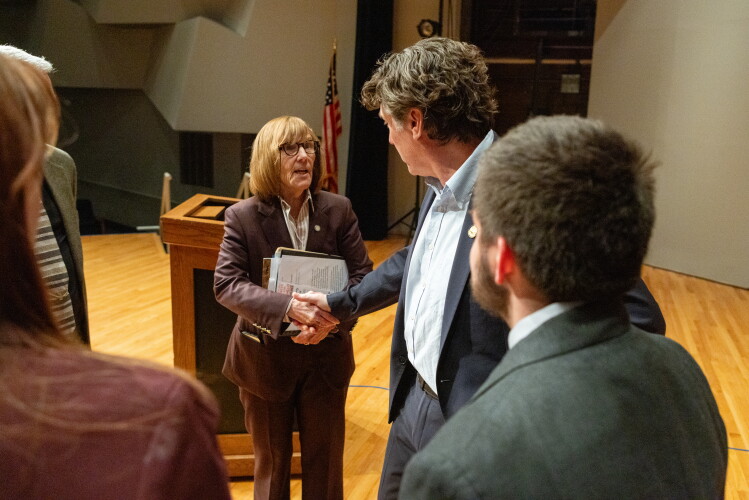
Toward the end of the debate, the candidates had the opportunity to question each other directly.
Putnam asked Perryman why she removed her name from a bill involving the federal 340B prescription drug pricing program after initially supporting it. Perryman said she worried the savings would not reach patients.
He also questioned her position on legislation addressing puppy mills, but Perryman disagreed with how he described her involvement.
Perryman then raised concerns about changes to the Senate’s process for confirming state agency commissioners.
She questioned whether the changes would limit lawmakers’ ability to hold state officials accountable, particularly amid concerns about fraud.
Putnam responded that the changes set a 60-day deadline for confirmation hearings without reducing the Senate’s oversight authority.
When Perryman suggested reducing that timeline, Putnam questioned her reasoning for opposing the existing deadline
Wrap-up
Lastly, the debate also covered declining enrollment and financial challenges at St. Cloud State University.
Perryman called for stronger partnerships between the university and local businesses to help attract students.
Putnam pointed to state funding for campus improvements and the North Star Promise program as efforts to support higher education.
The debate concluded with Perryman emphasizing her business background and plans to address fraud and affordability. Putnam highlighted his legislative record and efforts to work across party lines.
Voters will decide between Perryman and Putnam in the Nov. 3 general election for Minnesota Senate District 14.